
You do not need a car in Bilbao. The centre is compact, the metro is genuinely good, and parking is expensive and awkward. But if you are arriving by ferry there is one thing to sort out first, and most guides skip it.
First: the ferry terminal is 21 km from the city
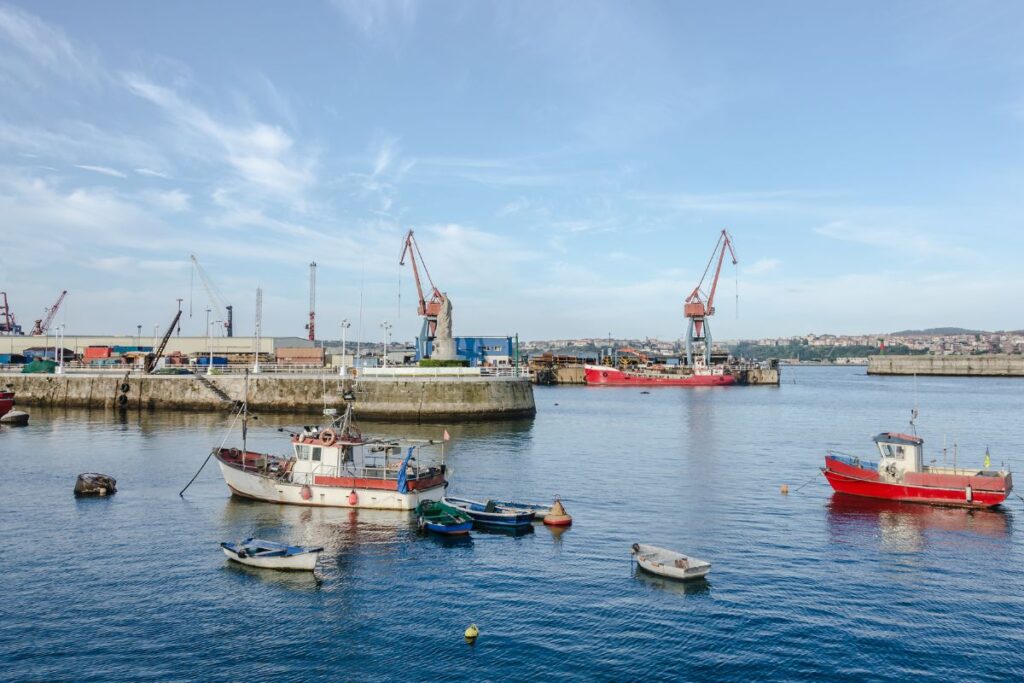
The Brittany Ferries terminal is at Zierbena, out on the Abra bay where the river meets the sea. It is not in Bilbao and it is not walkable. Plenty of pages describe it as a short stroll along the Nervión. It is a road journey of 13 miles, 15 to 30 minutes depending on traffic.
- Direct buses run from the port into central Bilbao
- Or take the train to Santurtzi station and change to bus 33
- A taxi is around 15 minutes in light traffic
Full options, timings and costs are in our guide to getting from Bilbao port to the city centre. Once you are in the city, everything below applies.
Get a Barik card on day one
This is the single decision that makes the rest easy. The Barik is a rechargeable contactless card that works across the whole network: metro, tram, Bilbobus, the trains out to Santurtzi, and the Artxanda funicular.
It is not just convenient, it is substantially cheaper than buying singles. The clearest example: a funicular journey costs around €2.50 on a standard single and roughly €0.65 with a Barik. The same pattern applies across the network.
- Buy it at metro stations, the funicular station and kiosks
- A few euros for the card itself, then top up as you go
- One card can be shared between several people on most services
- If you are staying a few days, the Bilbao Bizkaia Card is the tourist alternative, sold for 24, 48 or 72 hours with museum perks included
Walking: how much of the city it actually covers

More than you would think. The Guggenheim, the Casco Viejo, the Ribera market, Doña Casilda Park and the Zubizuri bridge are all within about half an hour of each other on foot, most of it along the riverside promenade.
Realistically, walking covers everything in our things to do in Bilbao guide except the funicular and the day trips out to the coast.
The metro: fast, and worth looking at

Designed by Norman Foster and opened in 1995, the Bilbao metro is an attraction in its own right. The curved glass station entrances are known locally as Fosteritos, little Fosters, and they are as photographed as anything in the city.
Lines 1 and 2 run the length of the Nervión valley, and Line 3, opened in 2017 and run by Euskotren, serves the north of the city. Between them they cover the centre, the suburbs and the coast.
- Line 1 to Plentzia takes you to a proper beach in about 40 minutes, which is the best value day trip in the city
- Getxo and Algorta for the transporter bridge and the old fishing port
- Use the Metro Bilbao app or Google Maps for live times
Tram and bus
The green Euskotren tram runs from Termibus coach station along the river, past the Guggenheim and on to the Casco Viejo and Atxuri. It follows exactly the stretch most visitors want, at street level, and it is the easiest way to rest your legs without losing the view.
Bilbobus covers everywhere the metro and tram do not, including the hillside neighbourhoods. Cheap and reliable, and the same Barik card works.
Lifts, escalators and the funicular
Bilbao sits in a valley with steep sides, and the city has built public lifts and escalators into the hillsides to deal with it, including at Santutxu and up towards Etxebarria Park. They are free, they are public transport rather than tourist attractions, and they save a lot of climbing.
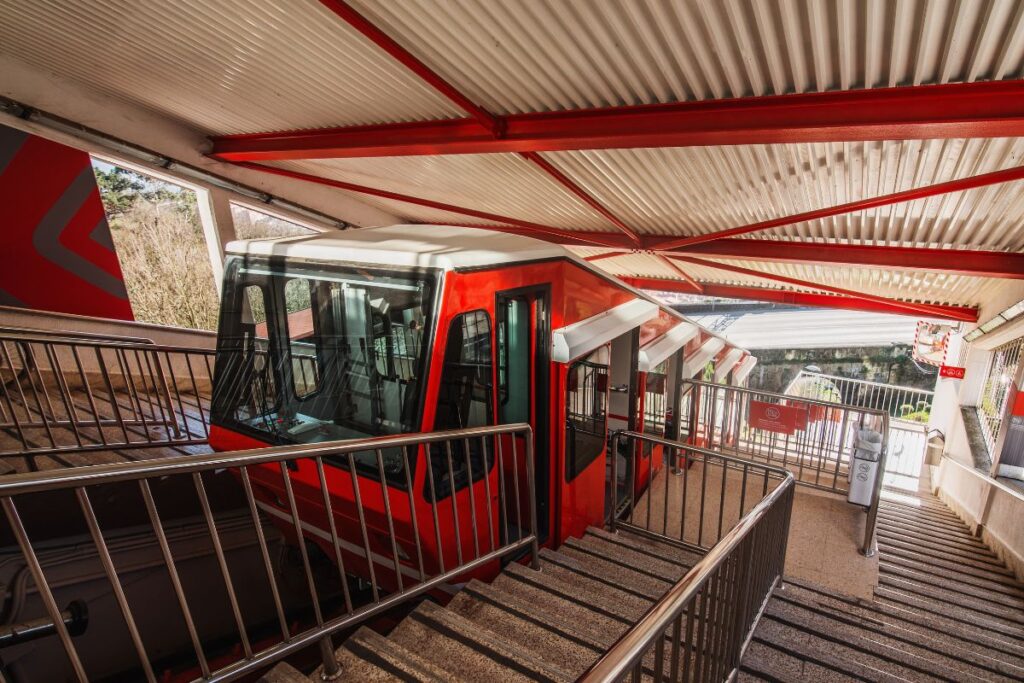
The Artxanda funicular is the one to go out of your way for. Three minutes to the best view in the city, and about €0.65 with a Barik.
Cycling, with one caveat
There are good bike lanes along the river and the flat riverside stretch is a genuinely pleasant ride. Away from the water, though, Bilbao is steep, and an ordinary bike stops being fun quickly.
Worth knowing: Bilbaobizi, the municipal bike-share, is designed for residents with an annual subscription rather than visitors, so it is not the drop-in option it looks like. Private rental shops are the practical route for a few days, and an electric bike is worth the extra.
Taxis and ride-hailing
Taxis are plentiful and metered. Uber coverage is patchy in Bilbao; Cabify is the more reliable app locally. A taxi makes sense late at night, with luggage, or for the run out to the ferry terminal if you have missed the last bus.
So should you bring the car at all?
It depends entirely on what you are doing after Bilbao.
- City break only: leave the car at home and travel as a foot passenger. It is cheaper on the ferry, and parking in central Bilbao is expensive and restricted.
- Bilbao then a road trip: bring it, but consider parking it while you are in the city rather than driving in daily. See our road trip ideas from Bilbao.
- Heading straight on: the A-8 runs east to the French border in 90 minutes and Barcelona is about six hours.
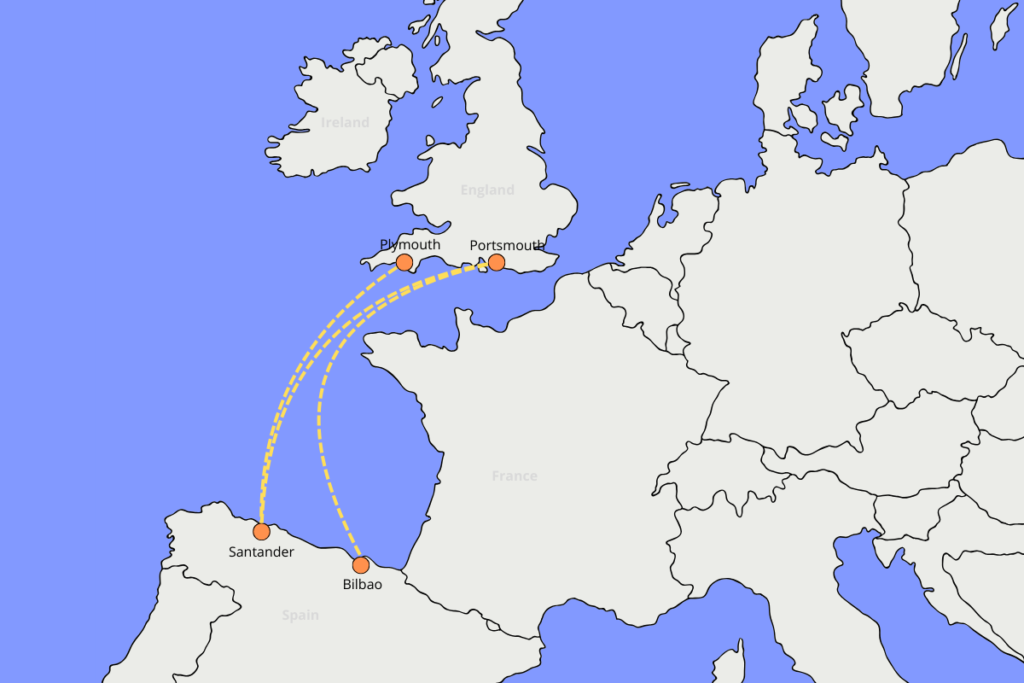
Sailings arrive from Portsmouth and from Rosslare. Foot passengers pay considerably less than anyone bringing a vehicle, so if you genuinely will not use a car, that is a real saving. Our cheapest crossing guide explains how the fare is built, and when to visit Bilbao covers timing.