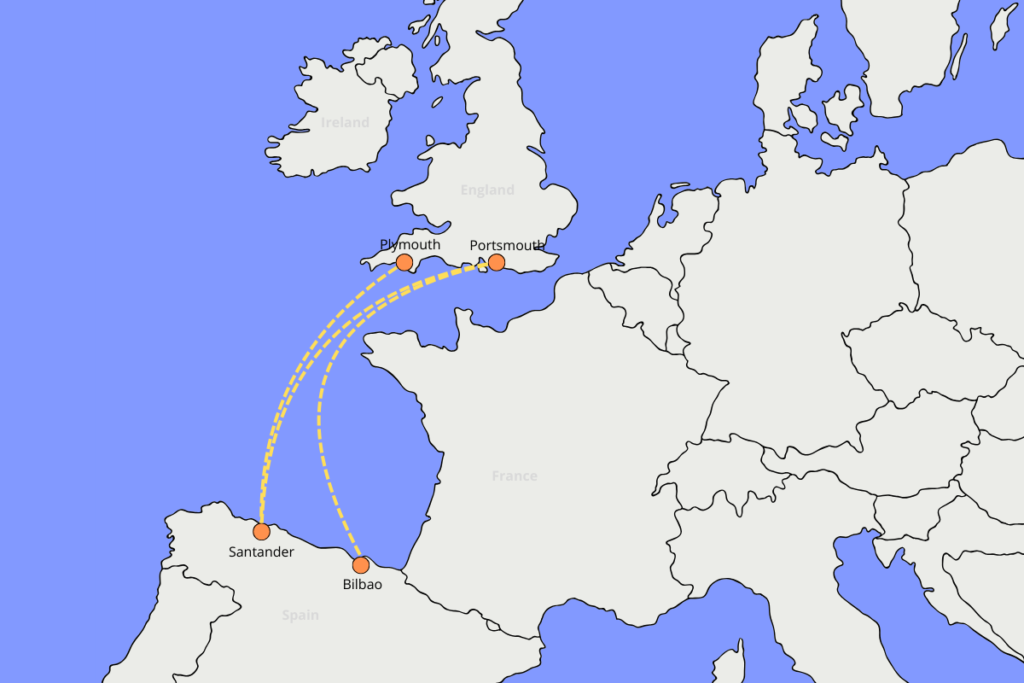
There is no single cheapest ferry to Spain, because the fare moves with the season, the sailing and how far ahead you book. What does not move is the structure of the price. Understand that and you can find the cheap crossing yourself on any date.
Below is how the four direct routes compare on cost and why, what pushes a fare up, and whether going via France actually saves you anything once the driving is paid for.
What you are actually paying for
Every quote is built from three separate things, and people usually only compare the first one.
- Passengers. Per person, and children are cheaper.
- The vehicle, if you bring one. A car is a big step up from foot passenger. A motorhome, van or anything towing is a bigger one again.
- Accommodation. This is the one people miss. Every direct crossing to Spain is overnight, so a reserved seat or a cabin is compulsory, not an upgrade.
That third line is why the headline fares mislead. On the two Portsmouth routes you are at sea for two nights, so you pay for cabin accommodation twice. From Plymouth it is a single night. Same cabin grade, roughly half the accommodation cost.
Which route is structurally cheapest
| Route | Nights at sea | Cost pressure |
|---|---|---|
| Rosslare to Bilbao | 1 to 2 | Usually the lowest headline fare of the four |
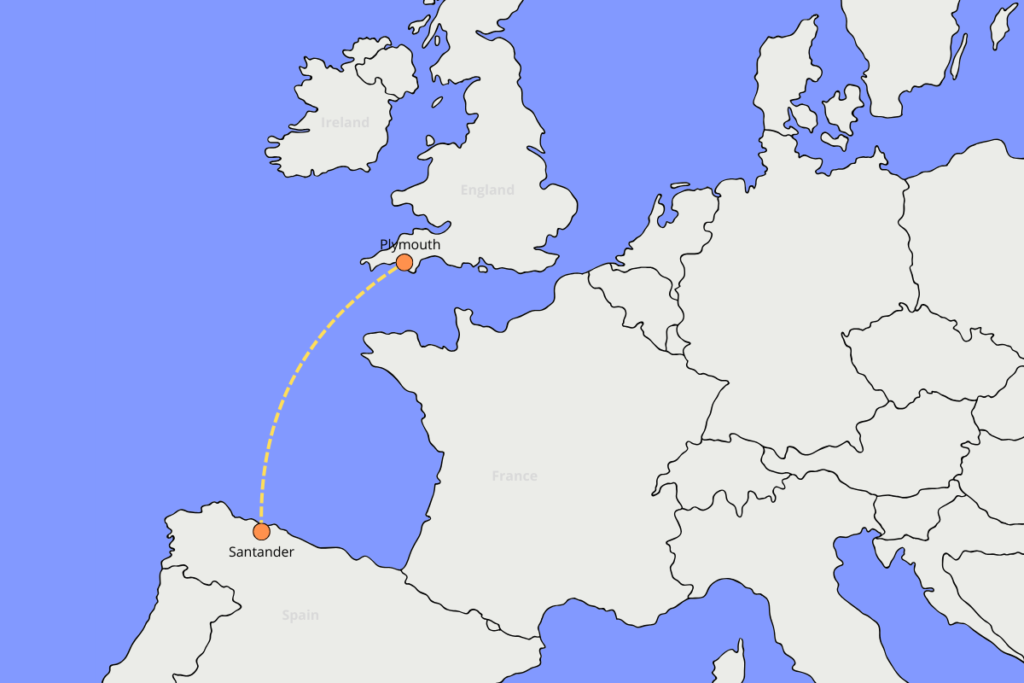
| Plymouth to Santander | 1 | Higher fare, but only one night of cabin to pay for |
| Portsmouth to Santander | 2 | Two nights of accommodation on every booking |
| Portsmouth to Bilbao | 2 | The longest crossing, so the same applies |
If you can get to Ireland easily, Rosslare to Bilbao is consistently the cheapest way across. It is also the only direct sailing from Ireland, so it removes the landbridge drive across Britain and a second crossing.

For anyone starting in England, do not assume the lowest headline fare wins. Price the Plymouth crossing with an inside cabin against a Portsmouth crossing with two nights of the same cabin before you decide.
What pushes the price up, and what brings it down
- Season. July and August are the peak, and the gap to October or April is large. Plymouth to Santander runs late March to early November, so October is the last cheap window on that route.
- School holidays. Independent of season, and they move the price sharply.
- Booking window. Brittany Ferries opens sailings up to 16 months ahead and fares generally climb as a sailing fills. Late drops happen but you cannot plan around them.
- Cabin grade. Reserved seat, inside cabin, outside cabin, Club, Commodore. The jump from seat to inside cabin is usually the best value move on the list.
- Filling the cabin. Cabins are priced per cabin, not per head. Four people in one four-berth costs less than two people in two twins.
- Vehicle size. Height and length brackets matter. A roof box can move you into the next band.
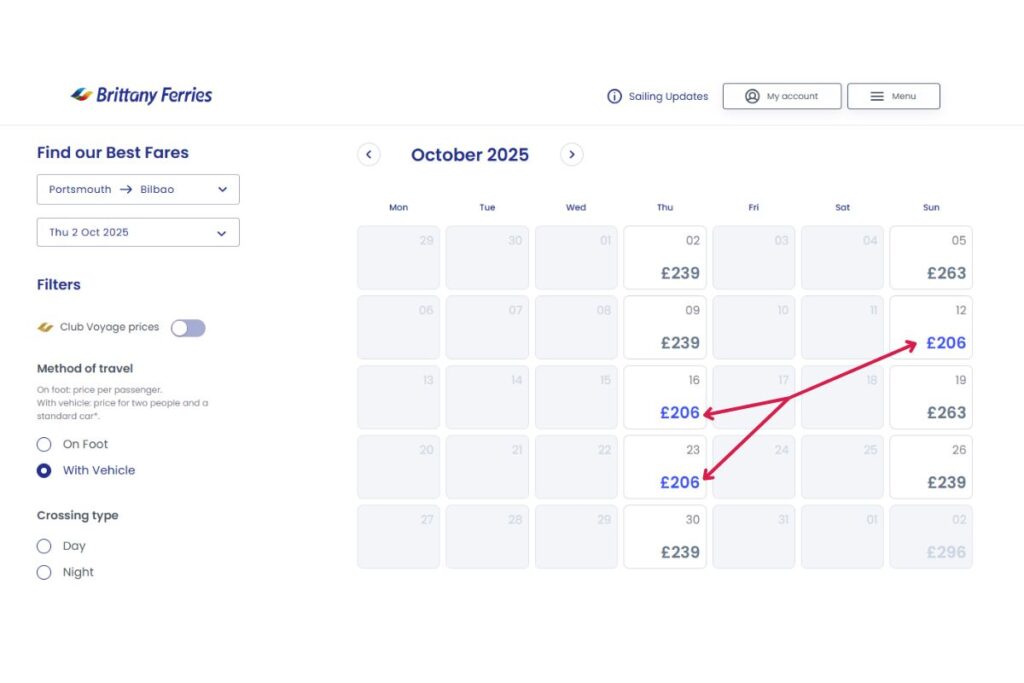
Check live fares across a whole month with Brittany Ferries’ Best Fares planner, which is the fastest way to see where the cheap dates actually fall.
Mini cruises and foot passenger deals
If you do not need the car in Spain, the cheapest way onto one of these ships is as a foot passenger. Brittany Ferries runs periodic promotions on the Plymouth to Santander route, and a mini cruise gets you the crossing and a short stay for a fraction of a full booking. Worth a look if you are flexible and travelling light, and it is also the cheapest way to try the ship before committing to a full trip. Current offers are on the Brittany Ferries deals page.
Is it cheaper to go via France?
The ticket is, substantially. The journey often is not.
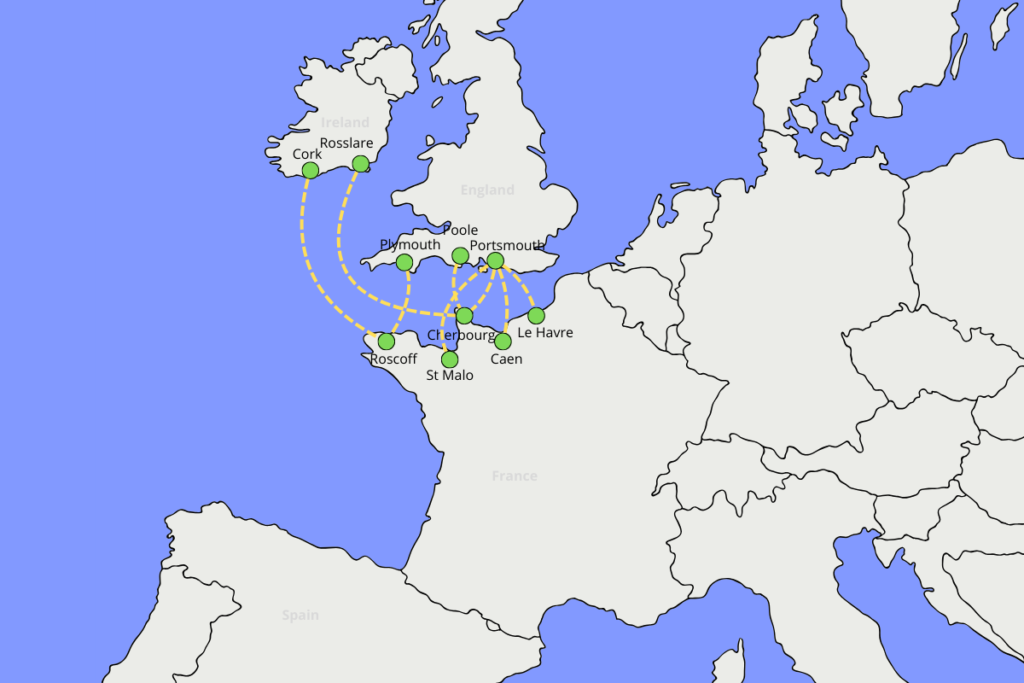
Channel crossings are short and cheap, and Brittany Ferries, DFDS, P&O and Irish Ferries all compete on them. Approximate crossing times:
| Crossing | Approx. duration | Then to Bilbao |
|---|---|---|
| Dover to Calais | 1h 30m | ~1,160 km |
| Portsmouth to Cherbourg | 3 hours | ~900 km |
| Poole to Cherbourg | 4 to 5 hours | ~900 km |
| Portsmouth to Le Havre | 5 to 8 hours | ~860 km |
| Portsmouth to Caen | 6 to 7 hours | ~850 km |
| Plymouth to Roscoff | 6 to 8 hours | ~880 km |
| Portsmouth to St Malo | 9 to 11 hours | ~780 km |
| Cork to Roscoff | ~14 hours | ~880 km |
| Rosslare to Cherbourg | ~18 hours | ~900 km |
Then you drive. What the cheap ticket does not include:
- French motorway tolls, roughly €70 to €100 each way
- Fuel for 800 to 1,250 km, call it €100 to €150 each way
- A hotel night on the road, usually one in each direction
- Meals for two extra travelling days each way
- Two days of your holiday, which is the cost nobody puts in the spreadsheet
For two adults travelling light, via France usually still wins on money. For a family of four or five with a car, the direct ferry is often level or cheaper once the hotel and the meals go in, and it costs you two fewer days. The full comparison is on our ferry to Spain via France page.
One detail that changes the maths: if you are heading for St Malo, Caen or Le Havre rather than defaulting to Dover, you cut roughly 300 km off the drive. Calais is the furthest of the commonly used ports from Spain.
How to find the cheapest crossing for your dates
- Start with the fare planner and look at a whole month, not a single date.
- Shift either side of the school holidays if you possibly can. October and April are the sweet spots.
- Price Plymouth with one night of cabin against Portsmouth with two, rather than comparing headline fares.
- Fill the cabin you book rather than splitting across two.
- If you are in Ireland, check Rosslare to Bilbao before anything else.
- Book early. Sailings open 16 months ahead and the cheap cabin grades go first.

All four crossings, with 2026 departure days and times, are compared side by side on our UK to Spain ferry routes page.
A note on prices
We deliberately do not publish a fare table on this page. Ferry pricing is dynamic and any figure we quote is wrong within weeks, which is exactly the problem with most of the “cheapest ferry to Spain” pages you will find. The structure above does not change. The numbers do, so check them live for your own dates.