
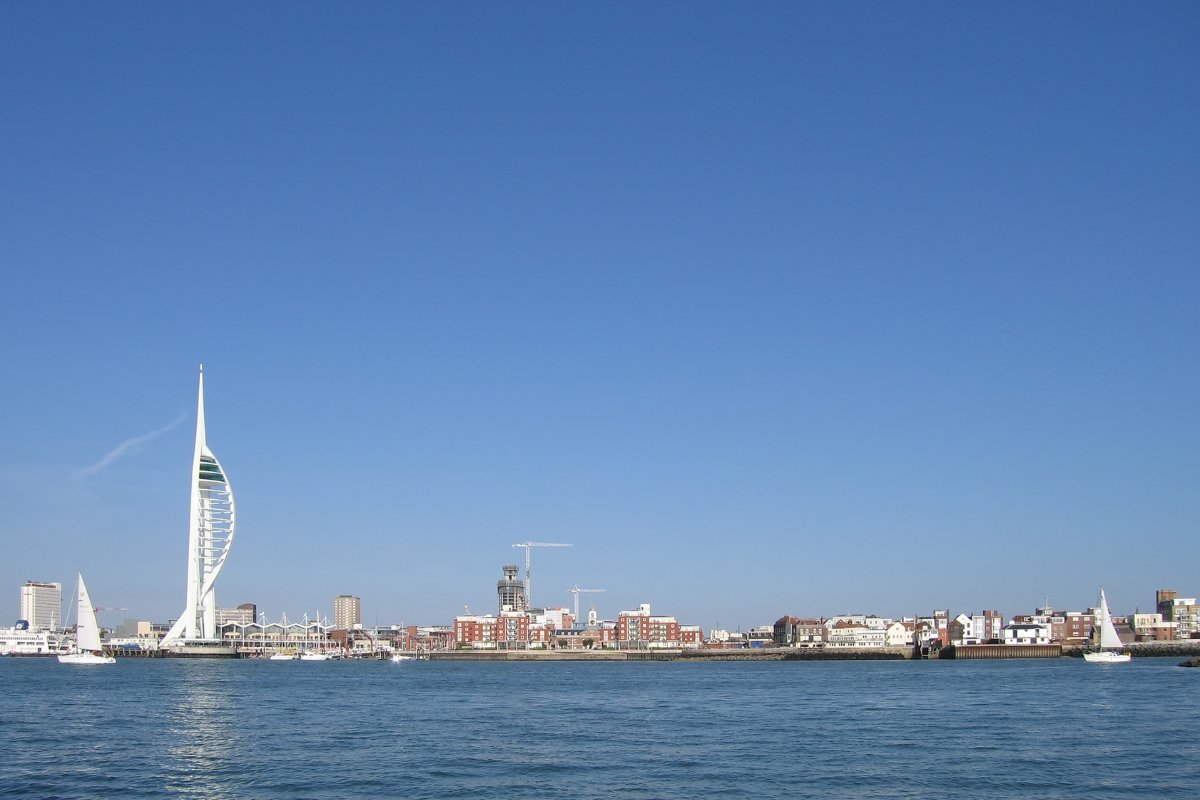
Brittany Ferries · Salamanca
Ferry from Portsmouth to Santander
Twice a week, all year, on the LNG-powered Salamanca. Around 33 hours and two nights on board, which means one complete day at sea. That day is the thing most people fail to plan for.
Portsmouth to Santander ferry timetable
Sailings leave Portsmouth on Monday and Friday evening, arriving in Santander on Wednesday and Sunday morning. Return crossings leave Santander on Wednesday and Sunday afternoon. Unlike the Plymouth route, which pauses over winter, this one runs all year, although winter months have fewer sailings than the main season.
| Direction | Departs | Arrives | Ship |
|---|---|---|---|
| Portsmouth → Santander | Monday 21:30 | Wednesday 08:00 | Salamanca |
| Portsmouth → Santander | Friday 22:00 | Sunday 08:00 | Salamanca |
| Santander → Portsmouth | Wednesday 14:00 | Thursday 20:00 | Salamanca |
| Santander → Portsmouth | Sunday 14:00 | Monday 17:30 | Salamanca |
Times are local at each port, taken from the Brittany Ferries schedule for April to November 2026. Winter sailings differ, and individual dates move, so confirm your exact sailing when you book. Every northbound departure from Spain is listed on our Spain to the UK page.
The clock lies by an hour
Leave Portsmouth at 21:30 on Monday and arrive Santander at 08:00 on Wednesday, and the clock says 34 hours 30 minutes. Spain is an hour ahead, so the real time at sea is 33 hours 30 minutes. The return is shorter still: Sunday’s northbound sailing is 28 hours 30 minutes, five hours less than the southbound on the same ship, because the schedules are built around arrival times rather than symmetry.
Check which ship your booking names
In 2026 this route is the Salamanca, not the Santoña that worked it from 2023. The two sister ships traded schedules this year, so anything written before 2026 names the wrong vessel. Inside they are near enough identical, but it is worth knowing why the guides disagree.
What 33 hours actually looks like
This is the part nobody writes down, and it is the difference between this route and the Plymouth one. From Plymouth you board, sleep, and arrive. Here you board, sleep, spend a complete day at sea, sleep again, and then arrive.
| When | Monday sailing |
|---|---|
| Mon evening | Check in by 20:45 at the latest, earlier in summer. Boarding, find the cabin, ship sails at 21:30 |
| Mon night | Down the Channel and past Ushant. Most people sleep through it |
| Tuesday | The full day. Open Atlantic, across the Bay of Biscay, land out of sight for most of it |
| Tue night | Second night on board, approaching the Spanish coast |
| Wed 08:00 | Dock at Santander, ten minutes from the city centre |
The Friday sailing works identically, with Saturday as the day at sea and a Sunday morning arrival.
Plan for the middle day, not the crossing
One day at sea is a long time with nothing to do and no way to get off. It is also the best part of the trip if you come prepared: a book, something for the children, and a reason to be up early. Free wildlife guides from the marine charity ORCA are on deck through the summer months, and over deep water there is a genuine chance of seeing something. That is a good way to spend a Tuesday morning, and there is more to fill the day than you would expect.
It also means your cabin matters more here than on a one-night crossing. You will be in and out of it all day.
Cabins on a two-night crossing
Accommodation is compulsory, not an upgrade, because the crossing is overnight. On this route you pay for it twice.
The options
- Reserved lounge seat, the cheapest on paper
- 4-berth inside cabin, no window
- 4-berth cabin with window and TV
- 2-berth Club cabin, TV and video on demand
- 2-berth Commodore Suite, with C-Club lounge access
- Pet-friendly and wheelchair-accessible cabins in limited numbers
What we would actually book
- Two nights in a reserved seat is a very long stretch. Price the inside cabin before ruling it out
- Cabins are priced per cabin, not per head, so fill the one you book
- A window matters more here than on the short route, because of that middle day
- Commodore includes the private lounge, which is the thing that makes a full day at sea pleasant
- Accessible and pet cabins sell out first. Book when the schedule opens
On our own crossing, on the Plymouth route, we booked a Commodore Suite early and it came in close to the price of a standard cabin. If you can get that gap, take it. On a two-night sailing the case is stronger still.
What the crossing costs
Your total is built from three separate things: the passengers, the vehicle if you are bringing one, and the cabin or seat.
What pushes the price up
- Two nights of accommodation rather than one
- School holidays and peak summer dates
- Booking close to departure
- Larger vehicles: motorhomes, vans, minibuses
- Outside cabins and Commodore over inside cabins
What brings it down
- Booking as early as the schedule allows, up to 16 months ahead
- Shoulder season and midweek sailings
- Travelling as a foot passenger or on a bike
- Inside cabins over sea-view
- Filling a cabin rather than booking two half-empty ones
Because two nights of cabin are involved, the accommodation line works out roughly double what the same cabin costs on the one-night Plymouth crossing. Fares move constantly, so check live prices for your dates rather than working from a published table. Our guide to the cheapest crossing explains what actually moves the number.
Crossing the Bay of Biscay
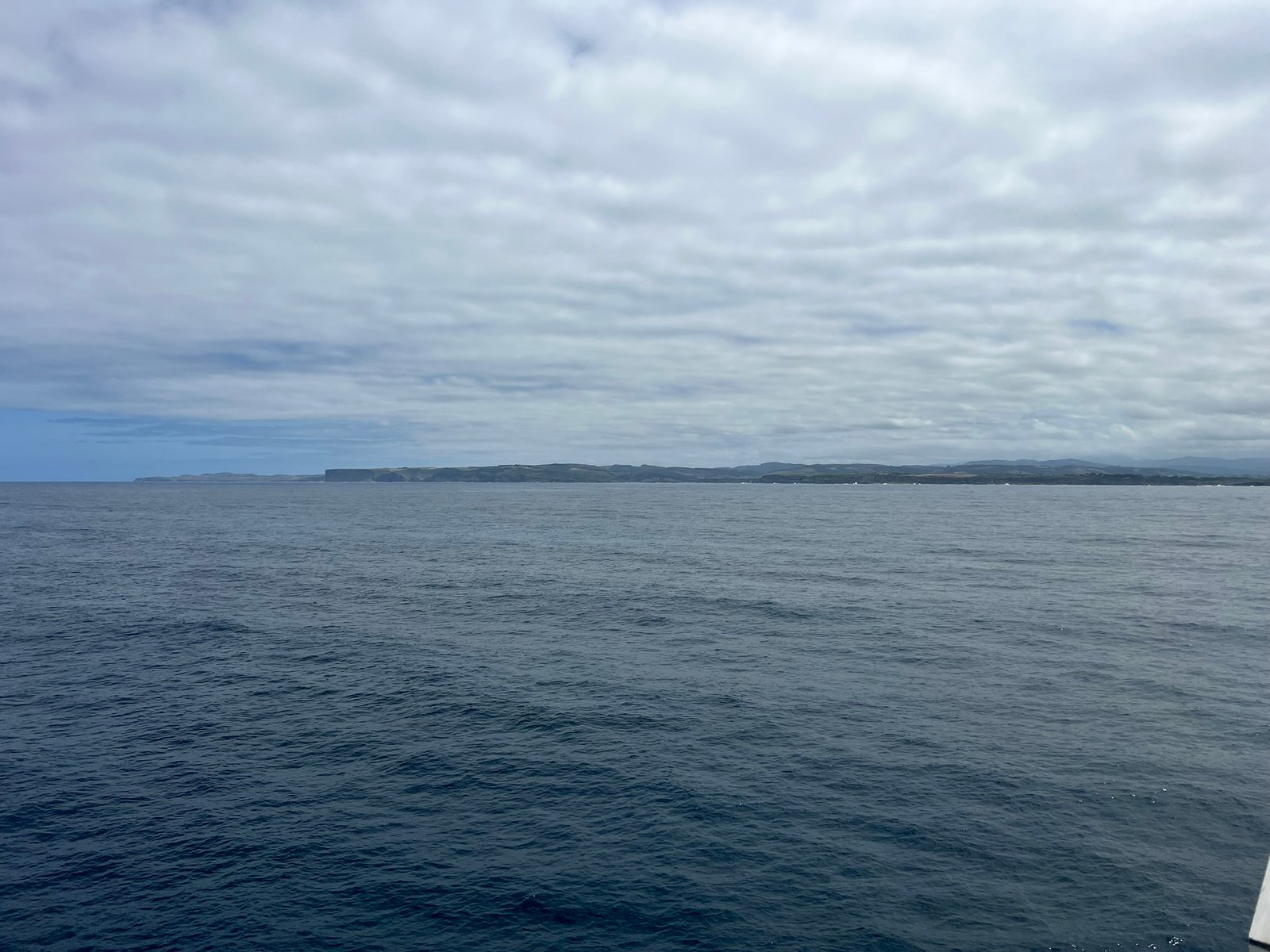
The route runs down the western side of France and across the Bay of Biscay to the Cantabrian coast. Biscay has a reputation for rough water and it earns it in winter, but a summer crossing is often calm. If you are prone to seasickness, take something before you feel unwell rather than after, and a cabin with a window helps.
Sea conditions for your sailing
Conditions halfway across often differ from the weather at either port, and this is a two-night crossing, so check the forecast for the whole window rather than just departure day.
On board the Salamanca
The Salamanca entered service in 2022 and was the first vessel in the Brittany Ferries fleet ordered as dual-fuel. She runs on liquefied natural gas rather than marine diesel, which cuts nitrogen oxide emissions by around 85 per cent and makes for a noticeably quieter ride. On a crossing this long, less engine vibration matters more than it sounds.
Eating and drinking
- Restaurant Azul, the main restaurant, open for breakfast, lunch and dinner
- Taberna Tapas, open for dinner and breakfast
- C-Club lounge, private for Commodore passengers and payable for others
- Plaza Mayor, shops and bars
- Duty-free shopping
For the middle day
- Video on demand: films, TV and radio, in the cabin or on your phone
- Indoor children’s play area with digital games
- Sun deck with sports equipment
- Outdoor playground
- Open deck for whale and dolphin watching
The interiors and the food lean Spanish rather than French, which is the deliberate difference from the Pont-Aven. Try a pintxo in the Taberna rather than defaulting to the main restaurant. There is no pool on the E-Flexer ships; the Pont-Aven is the only ship to Spain that has one, which is worth knowing if you are travelling with children.
Two nights is a long time in a kennel
Dogs cannot travel in the car on any Spanish route, so it is a pet-friendly cabin or a kennel. On a one-night crossing a kennel is a reasonable call. Here your dog is down there for two nights and a full day, which changes the maths. Full rules and the April 2026 paperwork changes are in our guide to sailing with a dog.
Full specifications, deck detail and a live position tracker are on the Salamanca page.
Getting to Portsmouth International Port
Check in at least 45 minutes before departure, or 90 minutes if you are travelling with a pet.
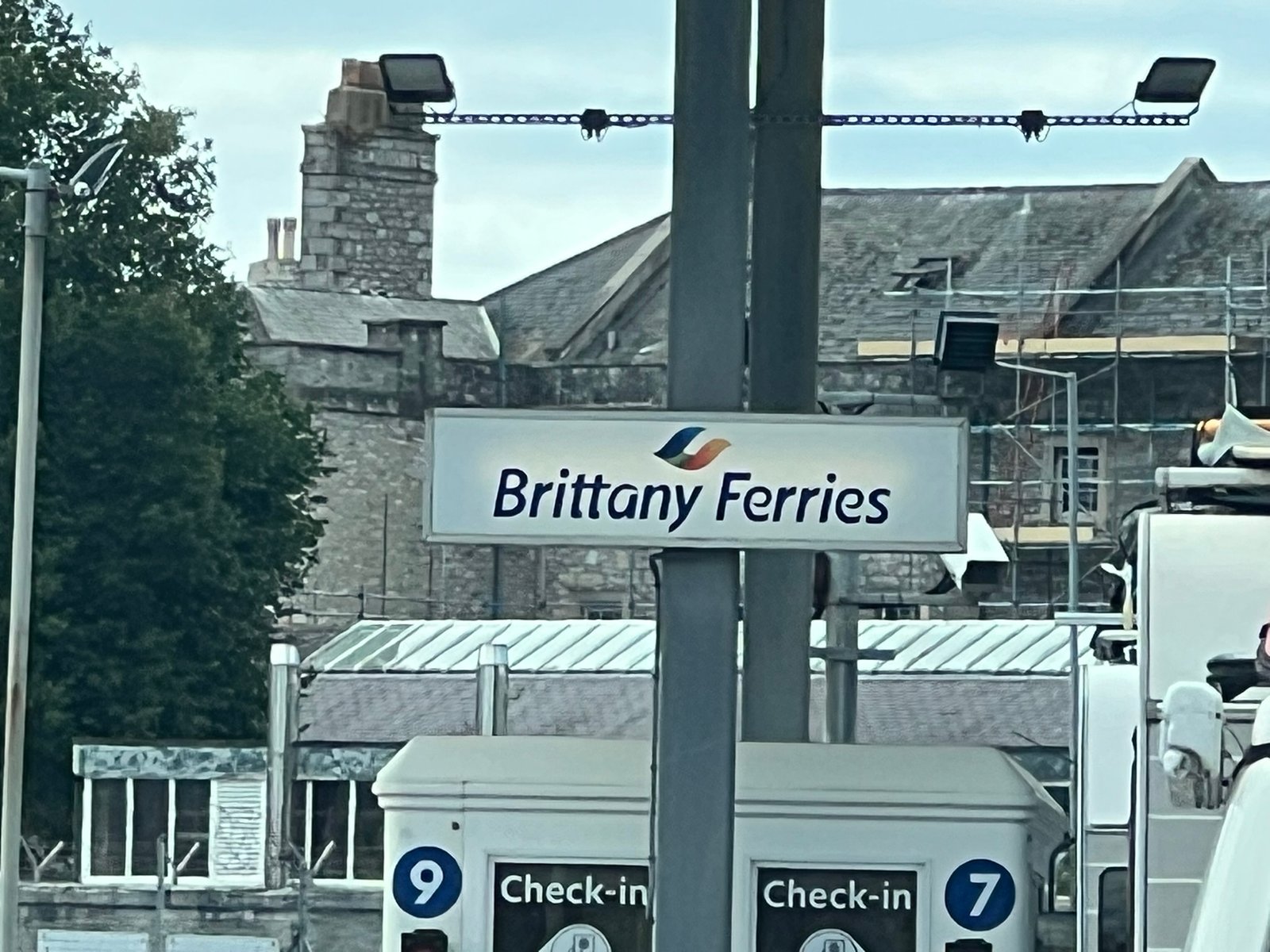
By road, the M275 runs directly into the port. Coming from London, take the M3 or the A3. From the Midlands, the A34 onto the M3. From Bristol and South Wales, the A36. From the South West, the A31. All of them feed into the M275.
Measure your vehicle before you book parking
The port car park tops out at 2.1 metres, or 6 ft 11 in. Roof boxes are what usually catch people out rather than the car itself. Alternatives, prices and the pre-booking options are in our Portsmouth ferry port guide.
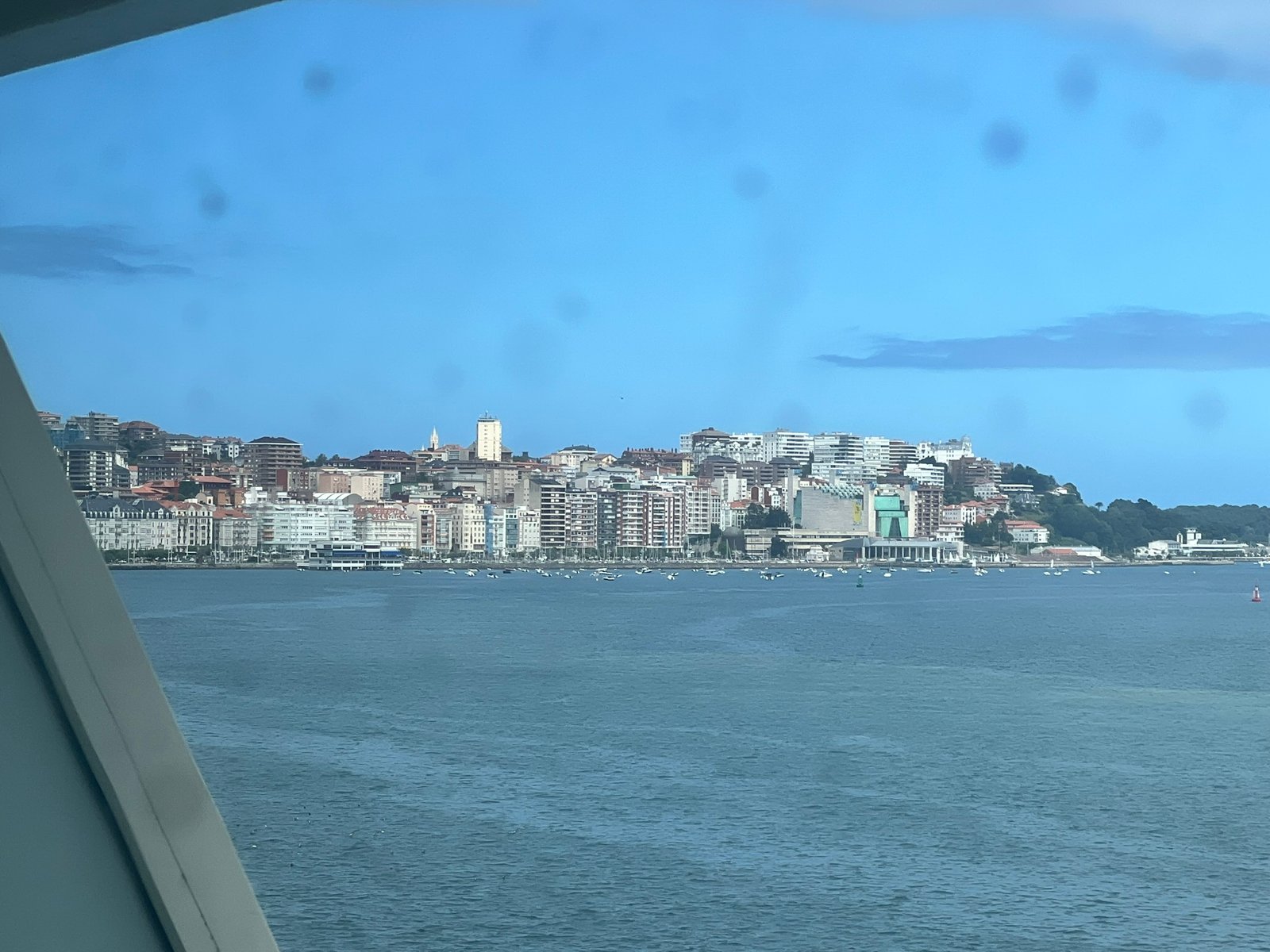
At the Spanish end, the terminal is at Muelle de Mali&antilde;o, about ten minutes from the centre of Santander, with two monitored car parks. See the Santander port guide and what to do once you arrive.
Is Portsmouth to Santander the right crossing for you?
There are four direct sailings from the UK and Ireland to Spain, and they suit different trips. This is the honest comparison.
Choose this one if
- You are travelling outside the summer season, since this is the only Spanish route that runs year round
- You are coming from London, the South East or the Midlands
- You want a modern LNG ship with Spanish food and decor
- You are heading for Madrid, Segovia or on into Portugal, four to five hours from Santander
- You quite like the idea of a day at sea
Look at another route if
- You want the shortest crossing: Plymouth to Santander is 20h 30m and a single night
- You are travelling with young children, where a pool and a shorter crossing count for a lot
- You are heading for Barcelona or southern France: Portsmouth to Bilbao lands you 90 minutes from the border
- You are travelling from Ireland: Rosslare to Bilbao sails direct
- Your vehicle is over 2.1 metres and you need port parking
All four cross the Bay of Biscay and all four are operated by Brittany Ferries, so the choice comes down to which UK port is closer to you, where in Spain you are going, and whether you want one night at sea or two. Compare them on the UK to Spain ferry routes page.
Common questions
How long is the ferry from Portsmouth to Santander?
Around 33 hours 30 minutes southbound. The published times look an hour longer because Spain runs an hour ahead. Northbound is shorter, 28 hours 30 minutes on the Sunday sailing and 31 hours on the Wednesday.
Does it run in winter?
Yes. This is the only direct Spanish route that operates year round, though with fewer sailings than in the main season. Plymouth to Santander stops entirely from early November to late March.
Do I have to book a cabin?
You need accommodation of some kind, because the crossing is overnight. A reserved lounge seat is the minimum. Two nights in a seat is a long stretch and the inside cabin is usually worth pricing.
Which ship is it?
The Salamanca in 2026. She and the Santoña swapped routes this year, so older guides will say otherwise.
Can I take my dog?
Yes, in a pet-friendly cabin or an onboard kennel. You cannot leave an animal in the car on this route, and dogs must be muzzled outside the cabin.
Do I need a passport?
Yes, for every passenger including children. Spain also requires your passport to have been issued within the last ten years and to remain valid for at least three months beyond your departure from the EU.
Check dates and fares
Brittany Ferries, Portsmouth to Santander, twice weekly all year.
Book your tickets →Brittany Ferries Portsmouth terminal: Wharf Road, Portsmouth PO2 8RU