The only operator sailing direct to Spain
Brittany Ferries
Started in 1973 carrying cauliflowers from Roscoff to Plymouth. Today it runs 13 ships across 12 ports, and every direct crossing between the UK or Ireland and Spain is theirs. We sailed with them in August 2026.
Where it came from
Brittany Ferries was conceived in 1972 and ran its first commercial sailing on 2 January 1973. The ship was the Kerisnel, the route was Roscoff to Plymouth, and the cargo was cauliflowers and cognac. It was freight only, set up by Breton farmers who needed a way to get produce to Britain.
The Spanish services came five years later. Trans-Biscay sailings launched in 1978 with a twice-weekly seasonal link between Plymouth and Santander, and it stayed that way for roughly three decades. The network only expanded about fifteen years ago, adding Portsmouth, then Bilbao, then Rosslare.
| Detail | Figure |
|---|---|
| Founded | 1972, first sailing January 1973 |
| Passengers | 2.15 million in 2024, up from 2.03 million in 2023 |
| Turnover | €516 million in 2024 |
| Freight | 162,000 units in 2024 |
| Employees | Around 2,707, including 1,818 seafarers |
| Network | 13 ships, 13 routes, 12 ports |
The 12 ports are Roscoff, Saint-Malo, Cherbourg, Caen, Le Havre, Plymouth, Portsmouth, Poole, Cork, Rosslare, Santander and Bilbao.
The four routes to Spain
Around 340,000 passengers travelled by Brittany Ferries to Spain in 2025, five per cent more than the year before. In peak season the four routes between them run 16 sailings a week across the Bay of Biscay.
| Route | Crossing | Nights | Ship in 2026 |
|---|---|---|---|
| Plymouth to Santander | 20h 30m | 1 | Pont-Aven |
| Portsmouth to Santander | ~33 hours | 2 | Salamanca |
| Portsmouth to Bilbao | 33 to 36 hours | 2 | Galicia |
| Rosslare to Bilbao | 27 to 31 hours | 1 to 2 | Santoña |
Full comparison on the UK to Spain ferry routes page, northbound sailings on the Spain to the UK page, and live times via the operator’s own timetable.
There are wildlife guides on deck in summer
Brittany Ferries partners with the marine conservation charity ORCA, which puts trained guides on the Spanish sailings through the summer months. It costs nothing to join them on deck, and it is one of the better reasons to be awake early on the middle day. More on what there is to do on board.
The fleet
Five new ships joined between 2019 and 2025, the largest renewal programme in the company’s history. Two of them, the Saint-Malo in February 2025 and the Guillaume de Normandie in April 2025, are LNG-electric hybrids working French routes.
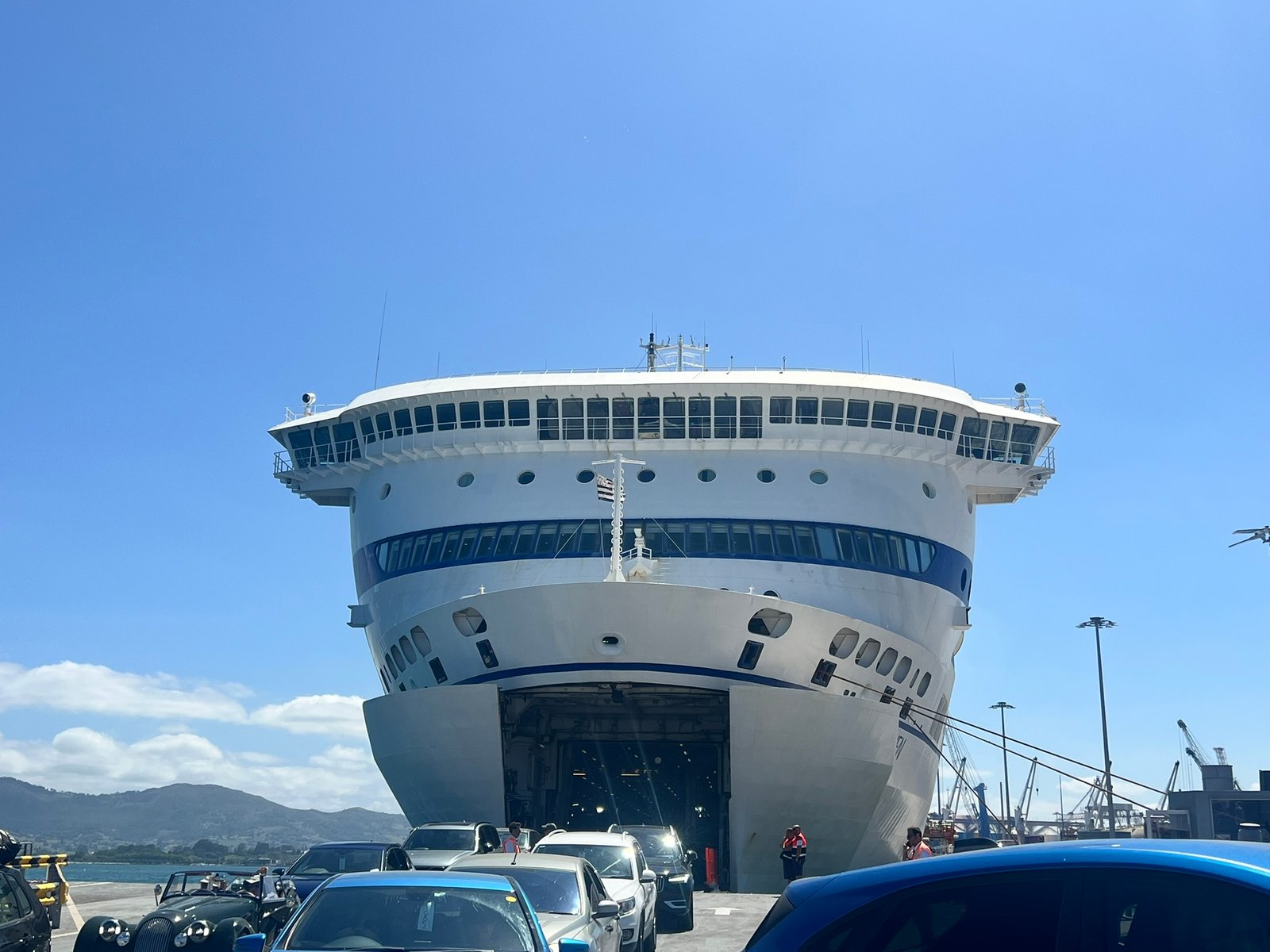
On the Spanish routes
Elsewhere in the fleet
- Armorique, Bretagne and Barfleur on French and Irish routes
- Mont St Michel and Normandie on Portsmouth to Caen
- Cotentin, largely freight
- Saint-Malo and Guillaume de Normandie, both new in 2025
The Salamanca and the Santoña swapped routes for 2026, so guides written before this year name the wrong ship. Detail on all four Spanish vessels is on the ships page.
Check-in and boarding
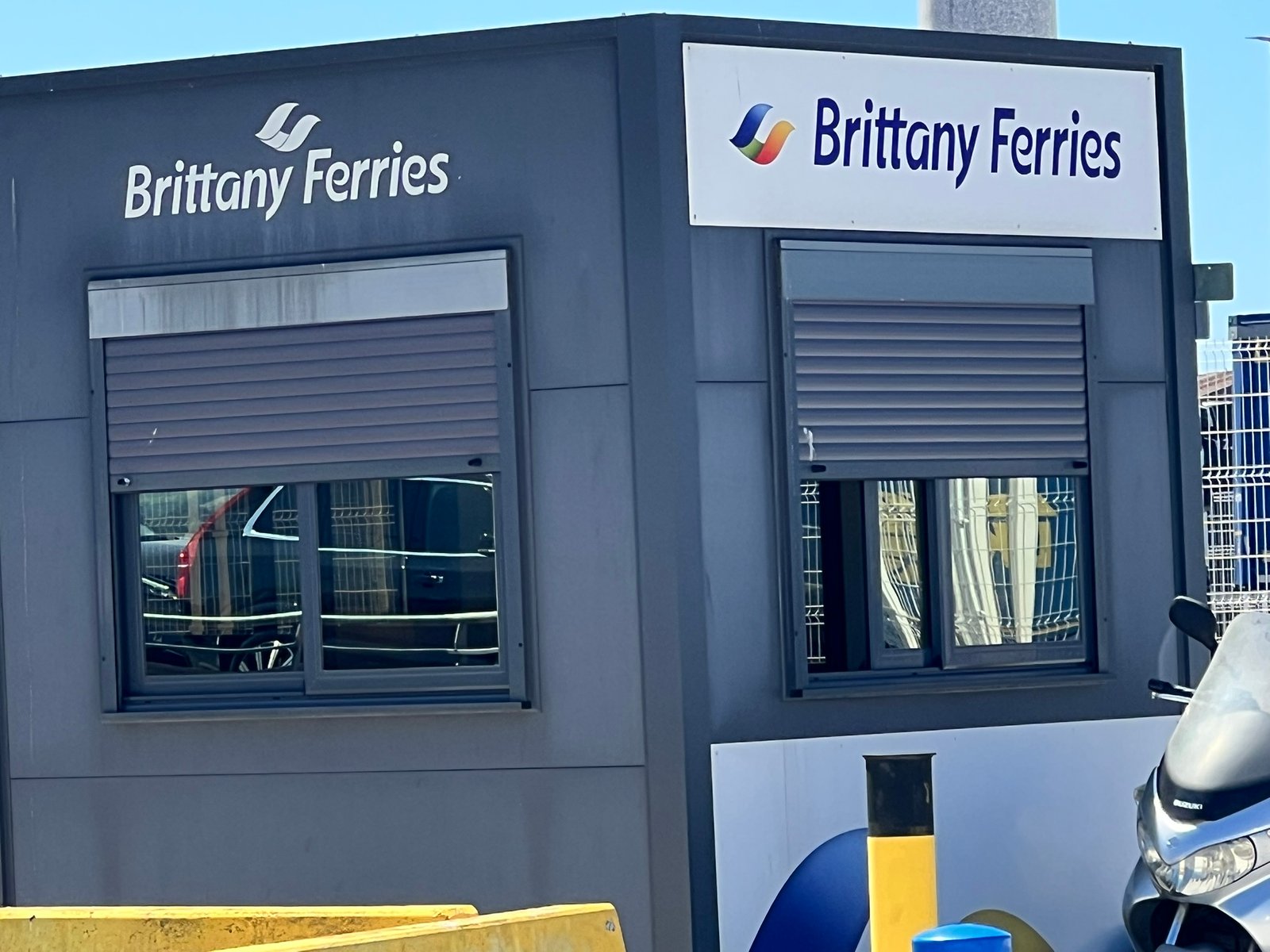
Check in at least 45 minutes before departure, or 90 minutes if you are travelling with a pet, since that process takes longer. Every passenger needs a valid passport, including children.
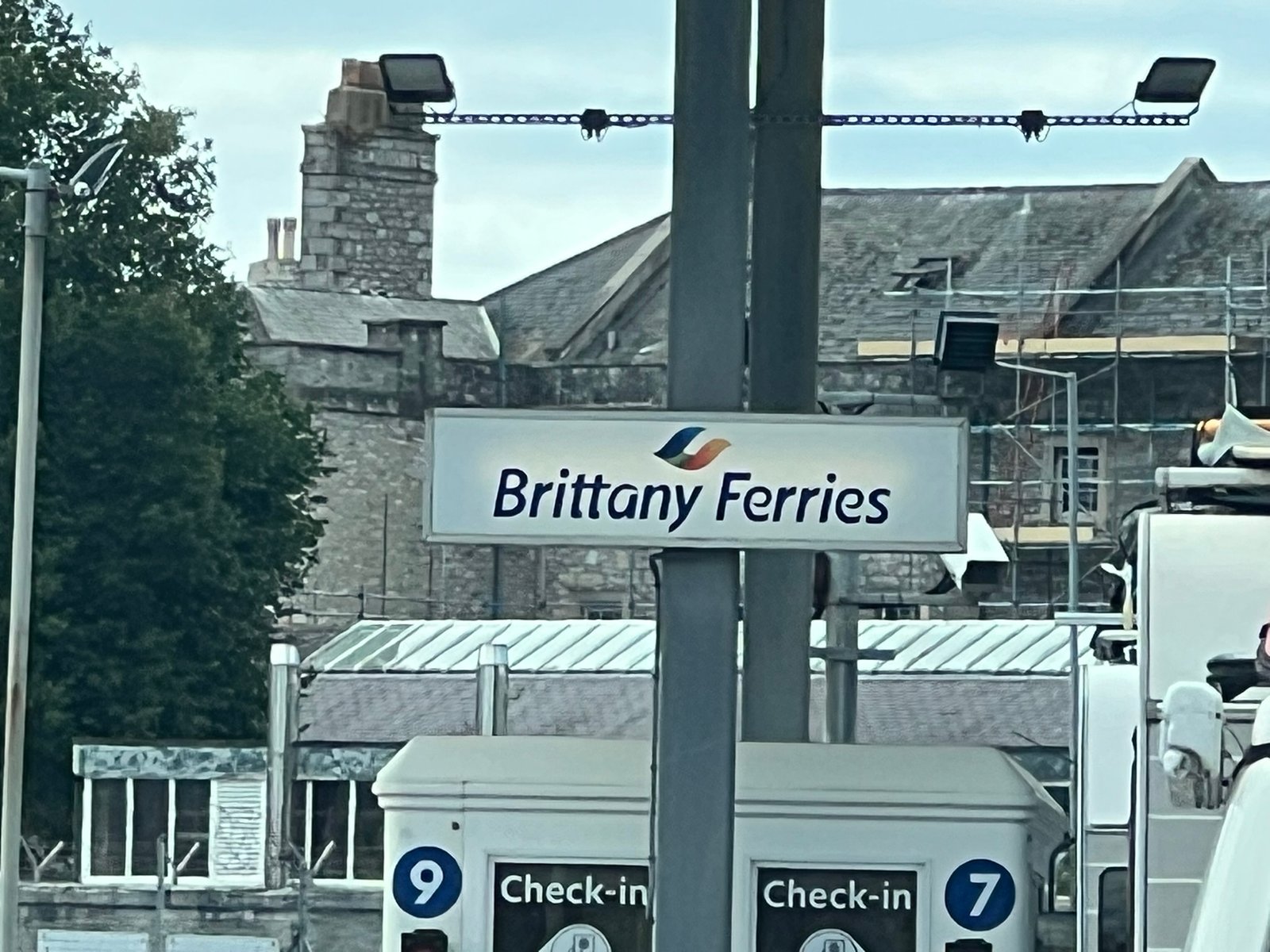
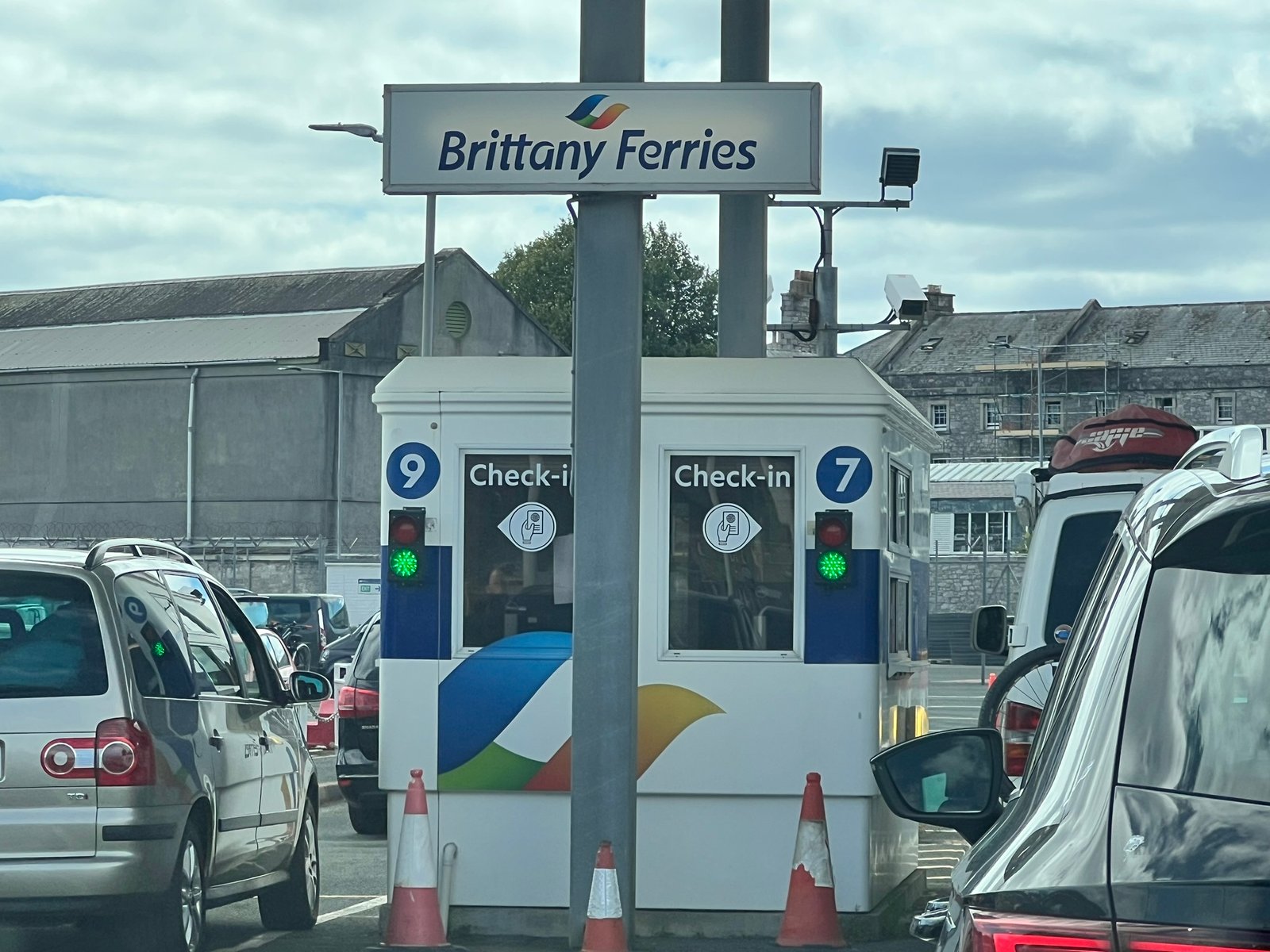
You hand over passports and get them back with a boarding pass, which doubles as your cabin key. Then you wait in the vehicle lanes until you are called forward.
You cannot go back to the car deck during the crossing
Pack a separate bag with everything you will want for the sailing before you drive on: medication, chargers, a change of clothes, anything for the children, the dog’s paperwork. Once the car decks are sealed they stay sealed. Note where you parked and which stairwell you came up, because finding your car again on a full deck at 07:00 is harder than it sounds. Cabins are vacated 30 minutes before arrival.
What the ships are like
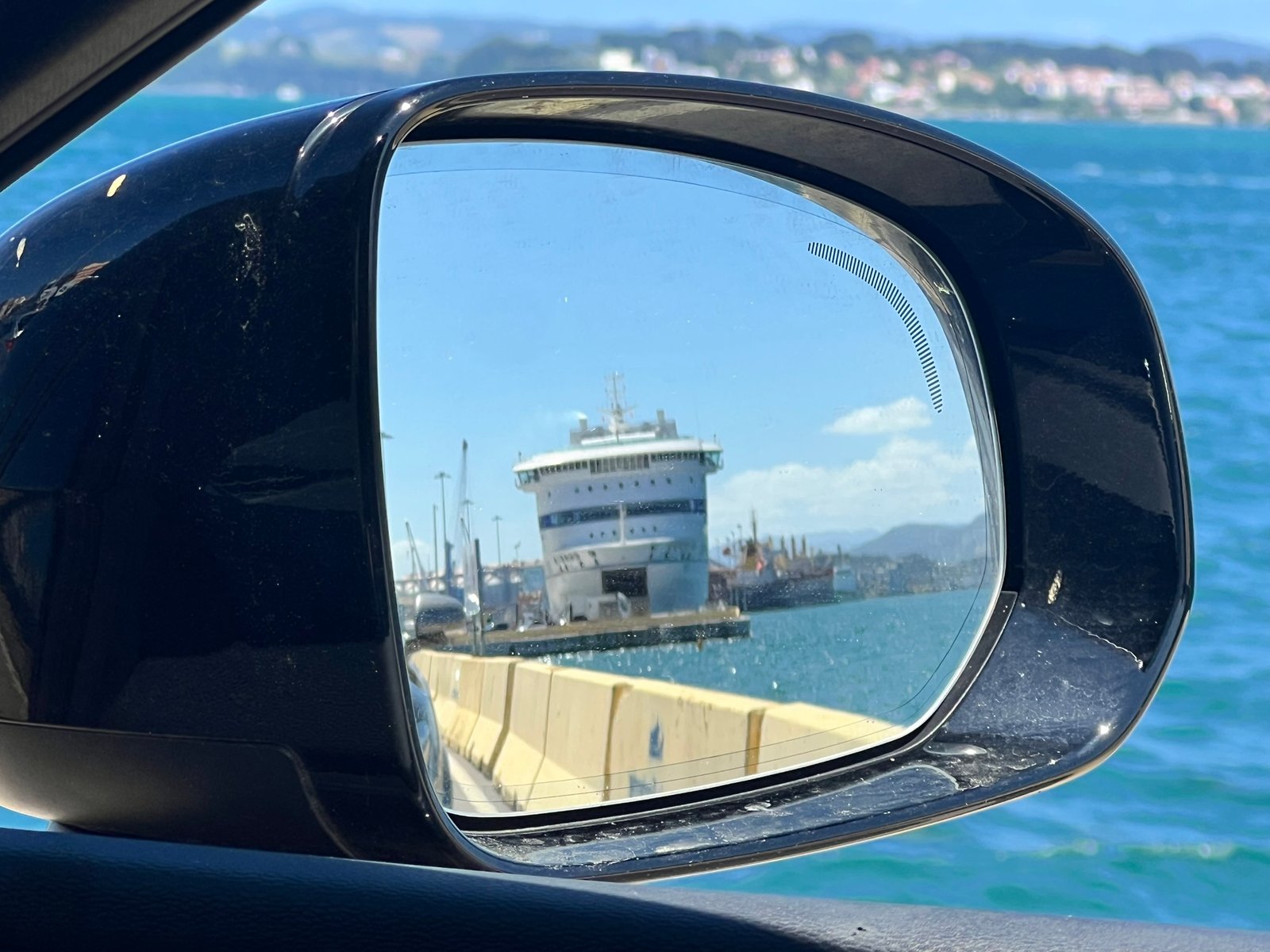
The Spanish routes are cruise-ferries rather than shuttles, which is the point of them. On the Pont-Aven that means an indoor pool, two cinemas, a spa, a children’s playroom and a separate teenage room. On the three E-Flexers it means Spanish interiors, a tapas bar and a C-Club lounge.
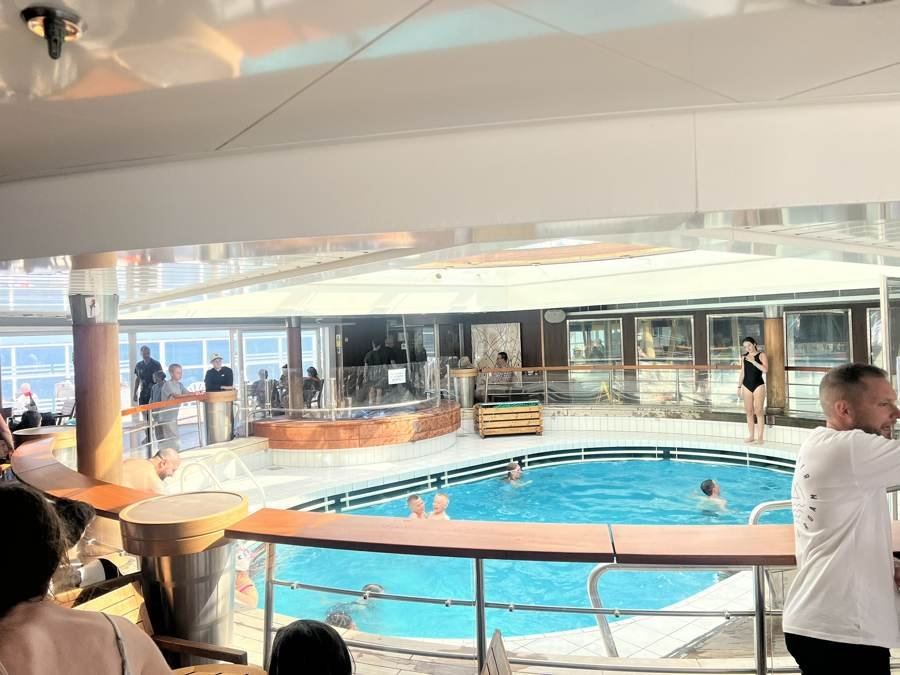
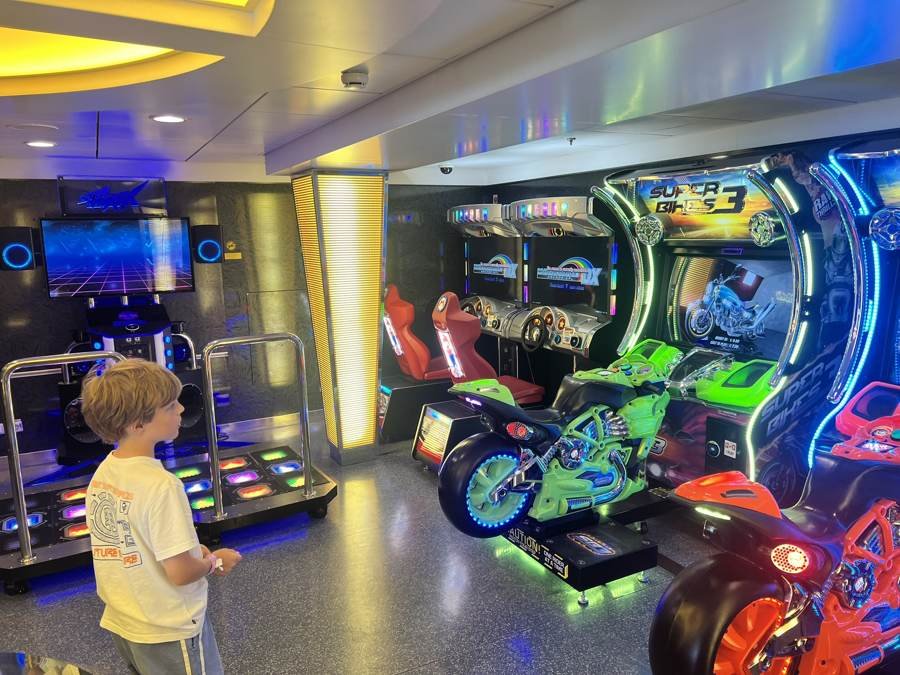
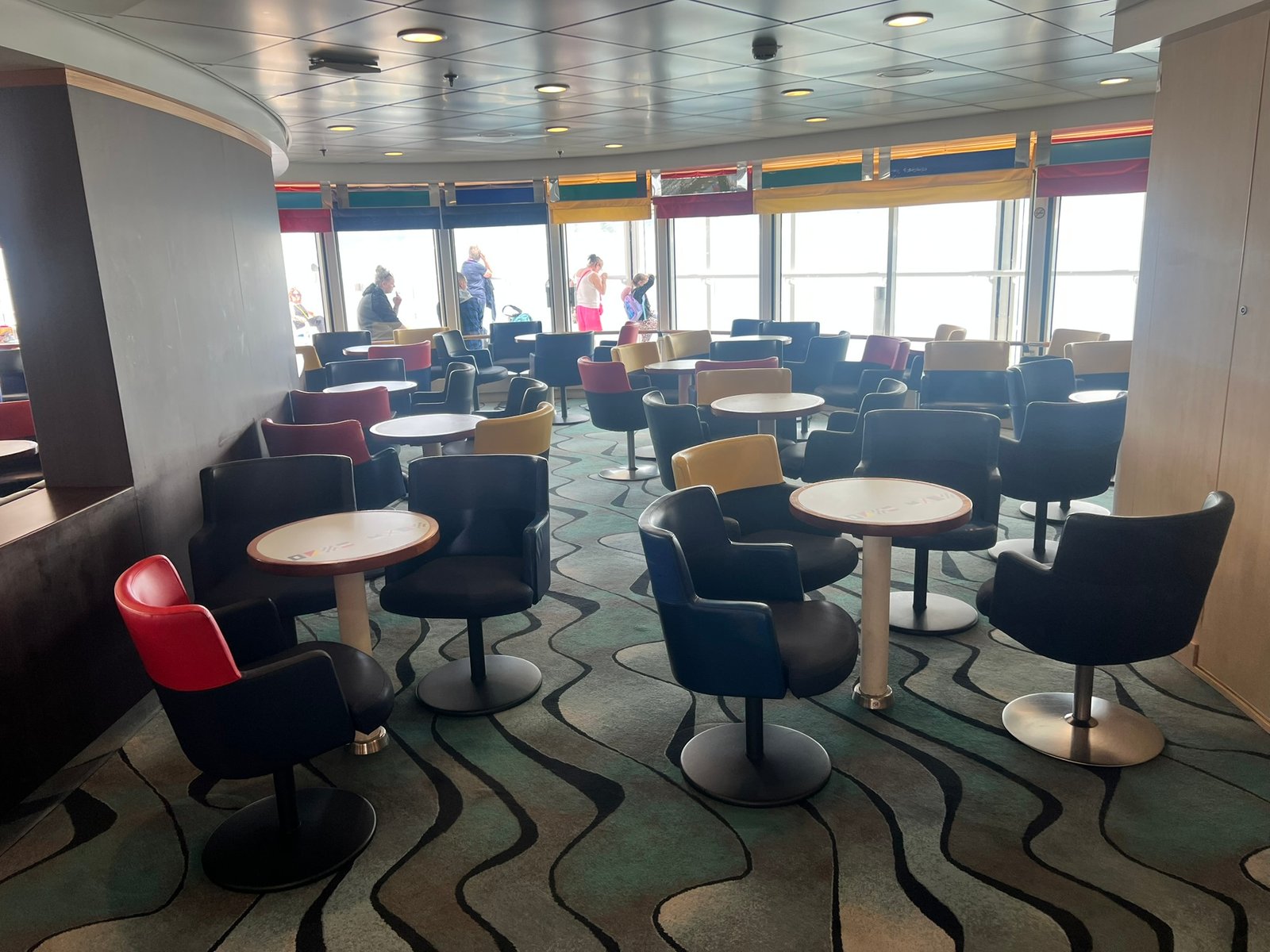
Food is a real part of it. Le Flora on the Pont-Aven is the buffet restaurant, with a broad spread of French and Spanish dishes; the E-Flexers run Restaurant Azul and a Taberna de Tapas. There is duty-free shopping on every ship.

Cabins, seats and pets
Every Spanish crossing is overnight, so accommodation is compulsory rather than an upgrade. A reserved lounge seat is the cheapest option, with cabins running up through standard, Club and Commodore grades.
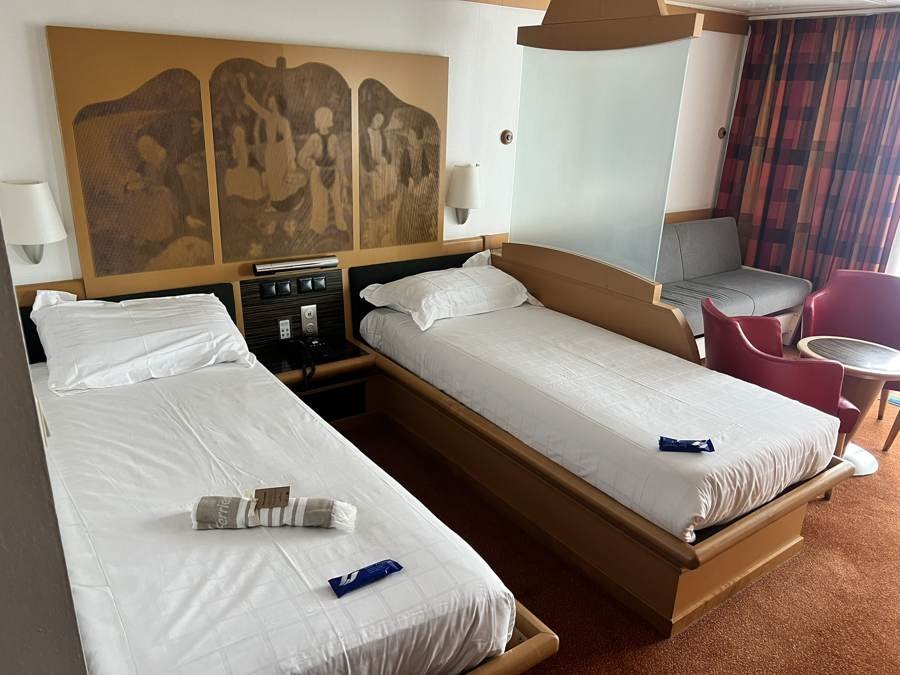
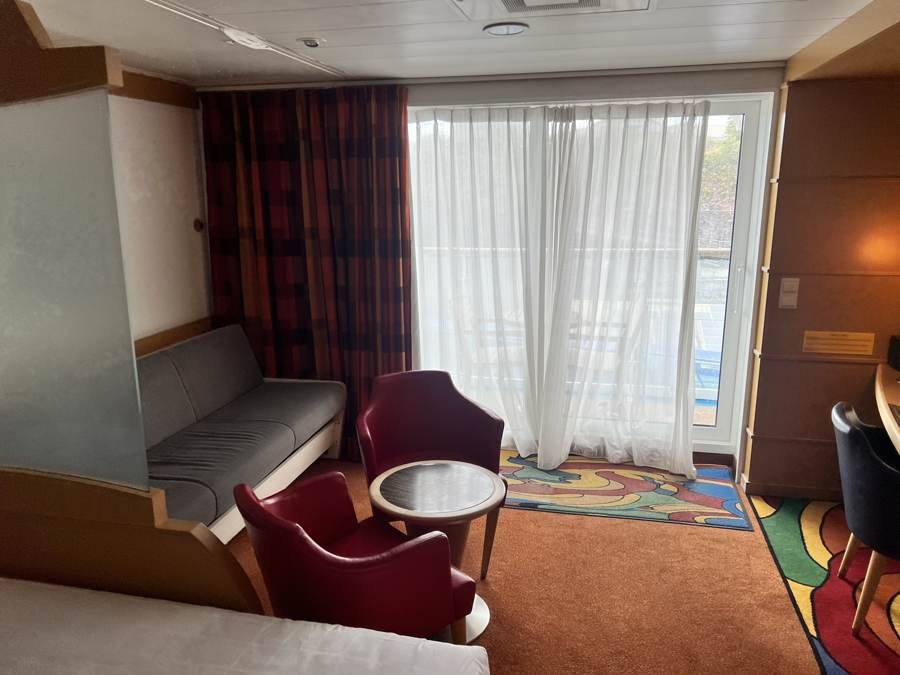
Accommodation grades
- Reserved lounge seats, on every ship
- Standard inside and outside cabins
- Club cabins with TV and video on demand
- Commodore cabins and suites
- C-Club lounge on the Galicia, Salamanca and Santoña
- Wheelchair-accessible cabins on every ship
Travelling with a dog
- Around 108,000 dogs a year across the network
- 162 pet-friendly cabins in the whole fleet, up from 66 in 2019
- On the Spanish routes: cabin or kennel, never the car
- Dogs muzzled outside the cabin, including on deck
- Full detail on our ferry to Spain with a dog page
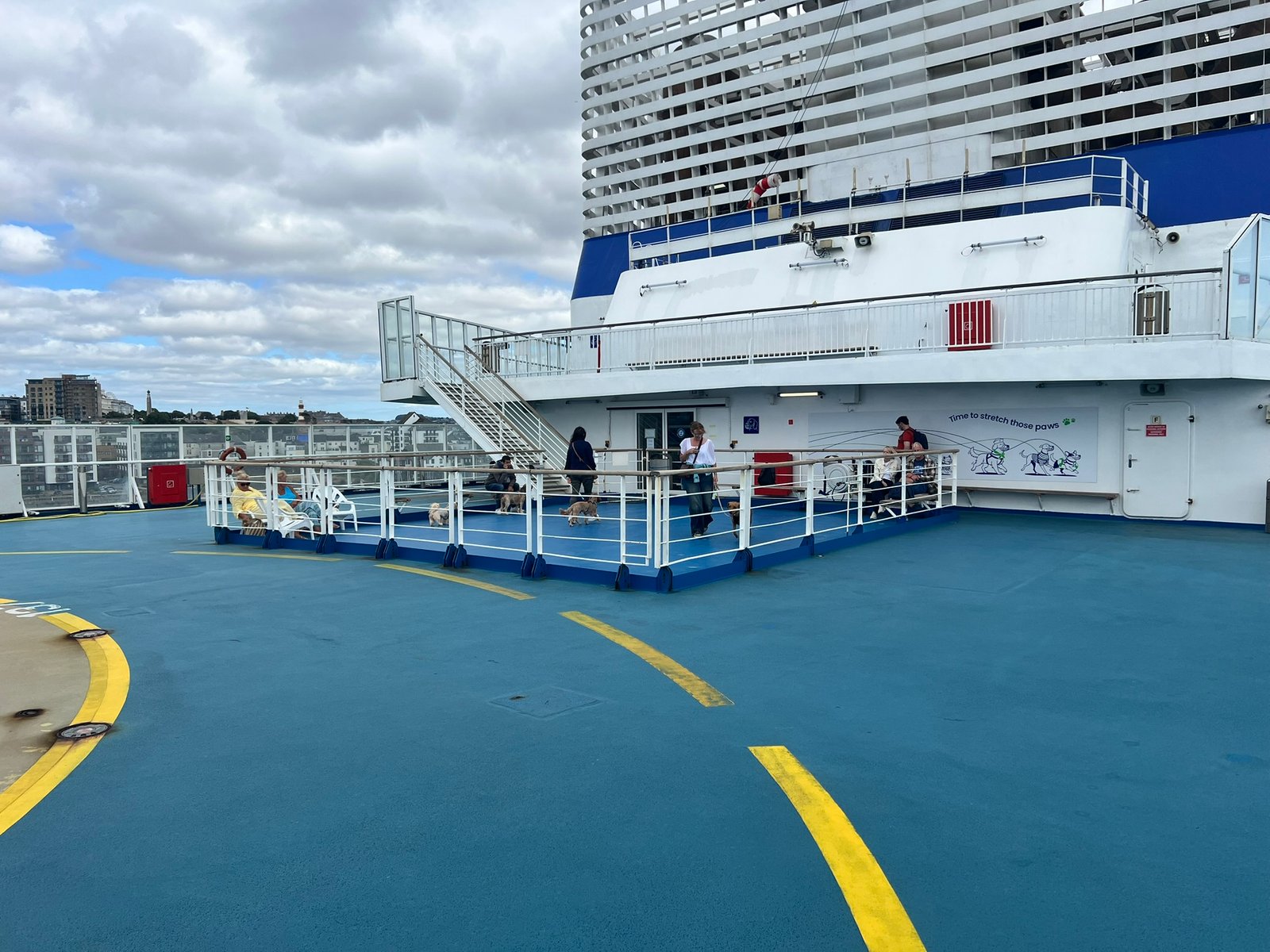
162 pet cabins across 13 ships is fewer than it sounds
Pet-friendly, accessible and Commodore cabins are always the first three categories to sell out. If you need one, book when the schedule opens rather than waiting for a sale, because a good fare on a sailing with no suitable cabin left is no use to you. Check what is available with the special accommodation tool.
Club Voyage
Club Voyage is the membership scheme. Depending on tier it covers discounts on bookings, onboard meals, priority boarding and lounge access.
Whether it pays depends entirely on how often you sail. For a family doing one Spanish crossing a year it rarely clears the membership cost. For anyone running back and forth to a second home, or making several French crossings a season, the booking discount alone usually covers it. Work out your likely number of crossings first, then compare.
Day trips to France
Brittany Ferries also sells short breaks that get you to France and back inside a day or two, from Portsmouth, Poole and Plymouth to Caen, Le Havre, Cherbourg, St Malo and Roscoff. Duty-free shopping onboard and reduced rates on seats and cabins apply.
Common questions
Is Brittany Ferries the only operator to Spain?
For direct sailings from the UK and Ireland, yes. All four routes are theirs. Other operators run Channel crossings to France, from which you drive.
How far ahead can I book?
Up to 16 months. Sailings for the following year are typically released in July.
Do I need a cabin?
You need accommodation of some kind, because every Spanish crossing is overnight. A reserved lounge seat is the minimum.
What happens if a sailing is cancelled?
Contact Brittany Ferries directly. We are an independent guide and cannot book, change or cancel tickets. UK reservations 0330 159 7000, Ireland 021 427 7801.
Book with Brittany Ferries
Four direct crossings to Spain, booking open 16 months ahead.
Check dates and fares →UK reservations 0330 159 7000 · Ireland 021 427 7801