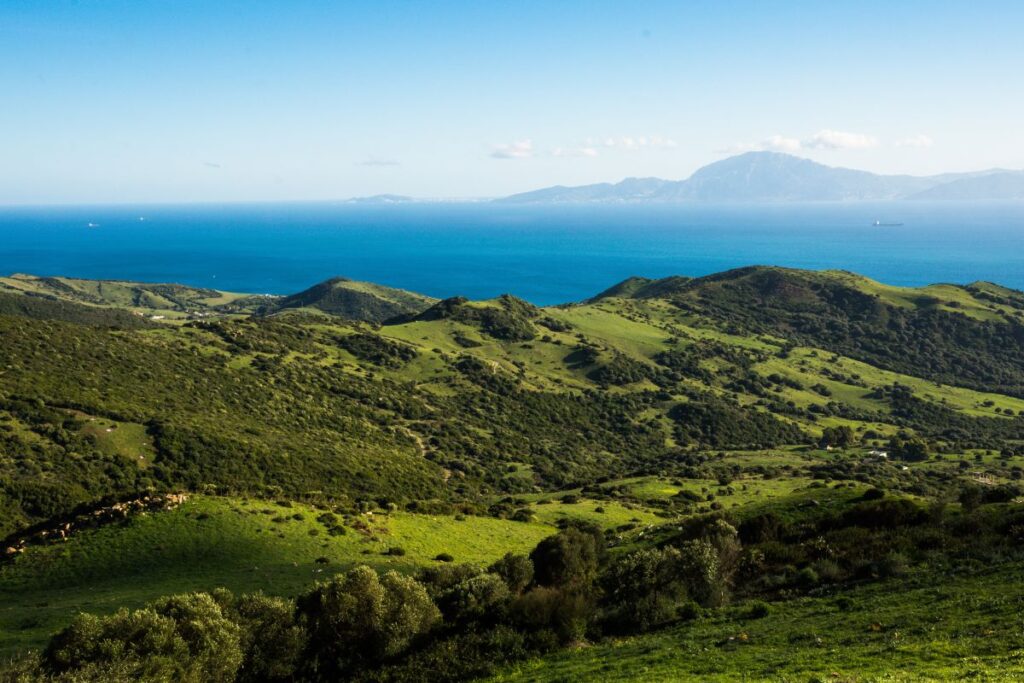
At its narrowest, the Strait of Gibraltar is 14 kilometres wide, about 8.7 miles. Spain and Morocco are on different continents but close enough that the fast ferry crosses in roughly an hour, and on a clear day you can stand on the Spanish shore and see the Rif mountains on the other side.
The distances that actually matter
The 14 km figure is the narrowest gap between the two landmasses, from Punta de Tarifa to Point Cires. No ferry sails exactly that line, so here is what you will really cover.
| From | To | Approx. crossing |
|---|---|---|
| Tarifa | Tanger Ville | ~1 hour |
| Algeciras | Tanger Med | 1 to 1h 30m |
| Motril | Tanger Med | 5 to 8 hours |
| Almería | Nador | 6 to 8 hours |
| Barcelona | Tanger Med | ~30 hours |
Tarifa is mainland Europe’s southernmost point, which is why the crossing from there is the shortest. It is also the one that lands you in Tangier itself rather than at a freight port down the coast.
Can you see Morocco from Spain?
Yes. On a clear day the Moroccan coast is plainly visible from Tarifa, and the Rif mountains rise behind it. Haze over the Strait is common in summer, so mornings are usually better than afternoons. From higher ground along the coast road between Tarifa and Algeciras the view is better again.
Ceuta and Melilla are not Morocco
This catches people out constantly, and plenty of route lists get it wrong.
Ceuta and Melilla are Spanish autonomous cities on the North African coast. Sailing from Algeciras to Ceuta, or from Almería to Melilla, keeps you inside Spain and inside the EU. You then cross a land border into Morocco, which is a separate process and can be slow, especially in summer.
It can still be the right choice, particularly for a motorhome or when the Tanger Med sailings are full. Just do not book it expecting to step off the boat in Morocco.
Getting to the Strait from a UK ferry
If you are driving down from a UK ferry to Spain, you land on the north coast and the Strait is at the opposite end of the country.
| From | To Algeciras | Driving time |
|---|---|---|
| Bilbao | ~650 miles (1,050 km) | 10 to 11 hours |
| Santander | ~620 miles (1,000 km) | ~10 hours |
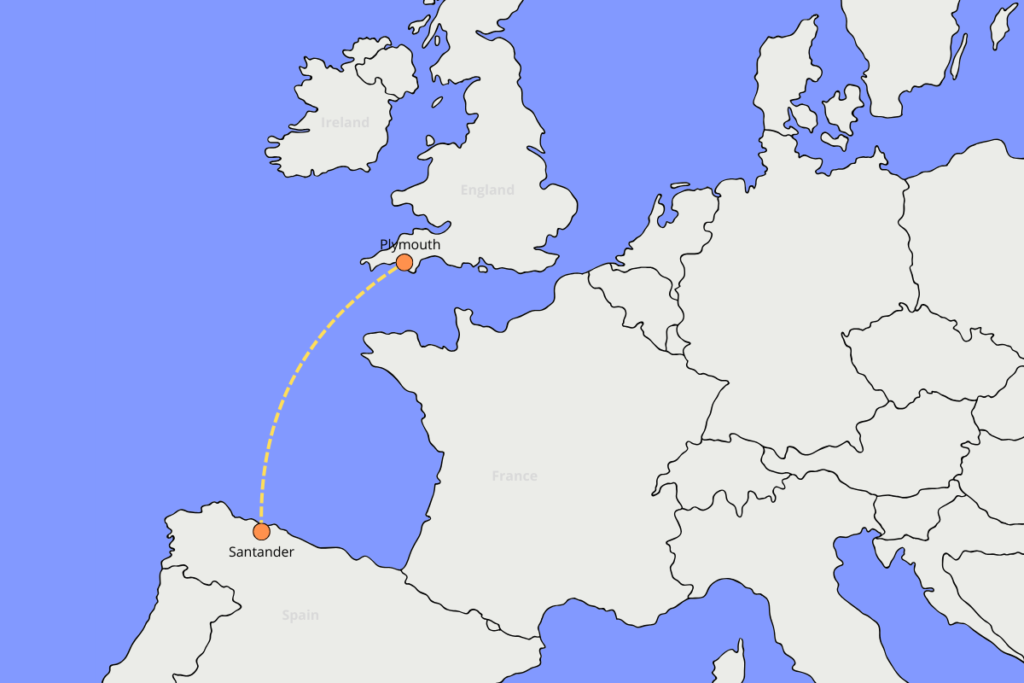
Either way it is a full day behind the wheel, usually split with a night around Madrid or Córdoba. It still beats the alternative: driving the length of France first adds roughly another 560 miles (900 km). The Plymouth to Santander crossing is the shortest way to get a car into Spain, at 20 hours 30 minutes with a single night at sea.
Practical things worth knowing
- Get your passport stamped on board. On most Strait crossings Moroccan police process entry during the sailing. Join the queue when it opens rather than waiting until you can see land, or you join a much longer one on the quayside.
- Summer is extremely busy. Between mid-June and mid-September the Strait handles an enormous annual movement of people and vehicles. Book ahead in that window rather than turning up.
- Bringing a car needs paperwork. V5C logbook, proof of insurance valid for Morocco, and a temporary vehicle import form completed on arrival.
- Fast ferries cancel in high winds more readily than the conventional ships. If the forecast is poor, Algeciras is the more robust option.
- Tanger Ville and Tanger Med are 40 km apart and both are sold as “Tangier”. Foot passengers want Tanger Ville; drivers are usually better off at Tanger Med.
Is a day trip realistic?
From Tarifa, yes. An hour each way plus border formalities leaves a workable day in Tangier, and day-trip packages run from the Costa del Sol in season. What is not realistic is a day trip from northern Spain: you would be driving ten hours each way to reach the port.
If Morocco is part of a longer Spanish road trip, plan it as the southern end of the journey rather than a side trip. Full detail on every crossing, which Spanish port to use and what the paperwork involves is on our ferries from Spain to Morocco page.